My role
Lead product designer
Other roles
Senior BE engineer
Senior FE engineer
Technical analyst
Munition analyst
Timeline
3 months
Tools used
Figma
FigJam
Zoom + Dovetail
Techniques used
User interviews
Process mapping
Impact/effort matrix
Dot voting
Overview
Increase data processing by 15x and reduce publication time from 2-3 hours to 90 seconds.
This project was the culmination of many problems all at once. Data entry teams had been raising concerns about the process for adding data to the system for some time. The sales team was starting to see a knock on from the current way of doing it. Management wanted more from the data we were ingesting. This project needed to deliver value to the business, both internally and externally.
My goal going into this project was to deliver a process that matched the current process throughput, knowing we could continue to improve it incrementally. However, the impact of this project was immediately evident.
15x
Increase in conflict data processed
Low value events increased by 15x and high value events by 14x.
3 hours
Faster upload for urgent events
Faster upload for emerging conflict zones. This became a USP.
2,300
Events processed in the first month
This was a new record for the events team.
RESEARCH
Keeping the user front and centre at all times.
User feedback: Asking our account managers to be vigilant for customer feedback. What isn’t working for a client, but also equally important to understand what is working. Are there patterns between clients?
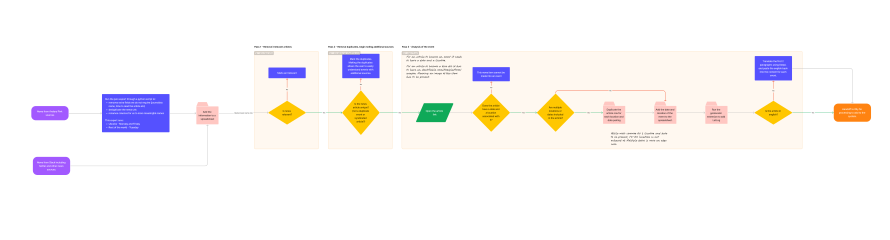
Process mapping: ensuring we fully understand the current process before implementing a new one. We need to ensure we know what is and isn't going to be possible when our project delivers.
User and stakeholder interviews: ensure we capture the emotional challenges our users and business stakeholders face. Sometimes these can be shared challenges on either side of the same coin.
I often find that the best way to start a new project is to talk to people in the space it occupies. Whether that is an SME or a member of another team, such as engineering or sales, they can often help contextualise the business focus we should return to and help sell an idea based on hours of user research to management later. Getting the best from both worlds.
The end users for this project are governments, humanitarian causes and military applications. They all have very different goals, but unsurprisingly, they are often difficult to discuss openly. These things can hamper efforts to extract meaningful problem spaces from actual users.
Process mapping
User interviews
Internal users were very used to the status quo, and teasing the information from them was the key to this project's success. However, after hours of internal interviews with the team, I was able to outline issues with the current process (from the obvious to the subtle).
Stakeholder interviews with engineering, management and sales, with a deep dive into the processes in place currently with the event data team.
“Things we have put in place aren’t being fully utilised”
Frustration from engineering
“Customers complain about the slow updates to the system”
Frustration from sales
“Everyone manages their own area of the process”
Lack of process unification
“We need events to enter the system faster”
Opportunity to improve the process
However, despite all the information provided in the interviews, it was important not to lose sight of the fact that all users should be considered.
problem
Legacy workflows restricting adoption of new technologies.
Reviewing the current process and the issues that the users and stakeholder had it was clear that there were many problems with the current process which was causing huge delays to the data being added.
User list assignment
Users were assigned lists of events to work on, this meant that no other users could work on them. Additionally, this meant the event was stuck with that user until the entire sheet was completed.
Knowledge silos had formed
Because some events shared similar patterns, each user had their own set of events to manage. 1 person handled Ukraine alone, 1 person handled Europe, and another person handled the rest of the world events. Knowledge silos like this can be problematic for the business on many levels.
Process
We have the problem defined, so we now move on to ideation and solution development.
As everyone knows, there is more than a single way to solve a problem. If you think about the way we speak, we can add emphasis on a specific word, or even a syllable, to change the way a sentence is received. This is the same with design. You can emphasise elements, but we must retest to ensure the emphasis is in the right place.
Workshops with engineering
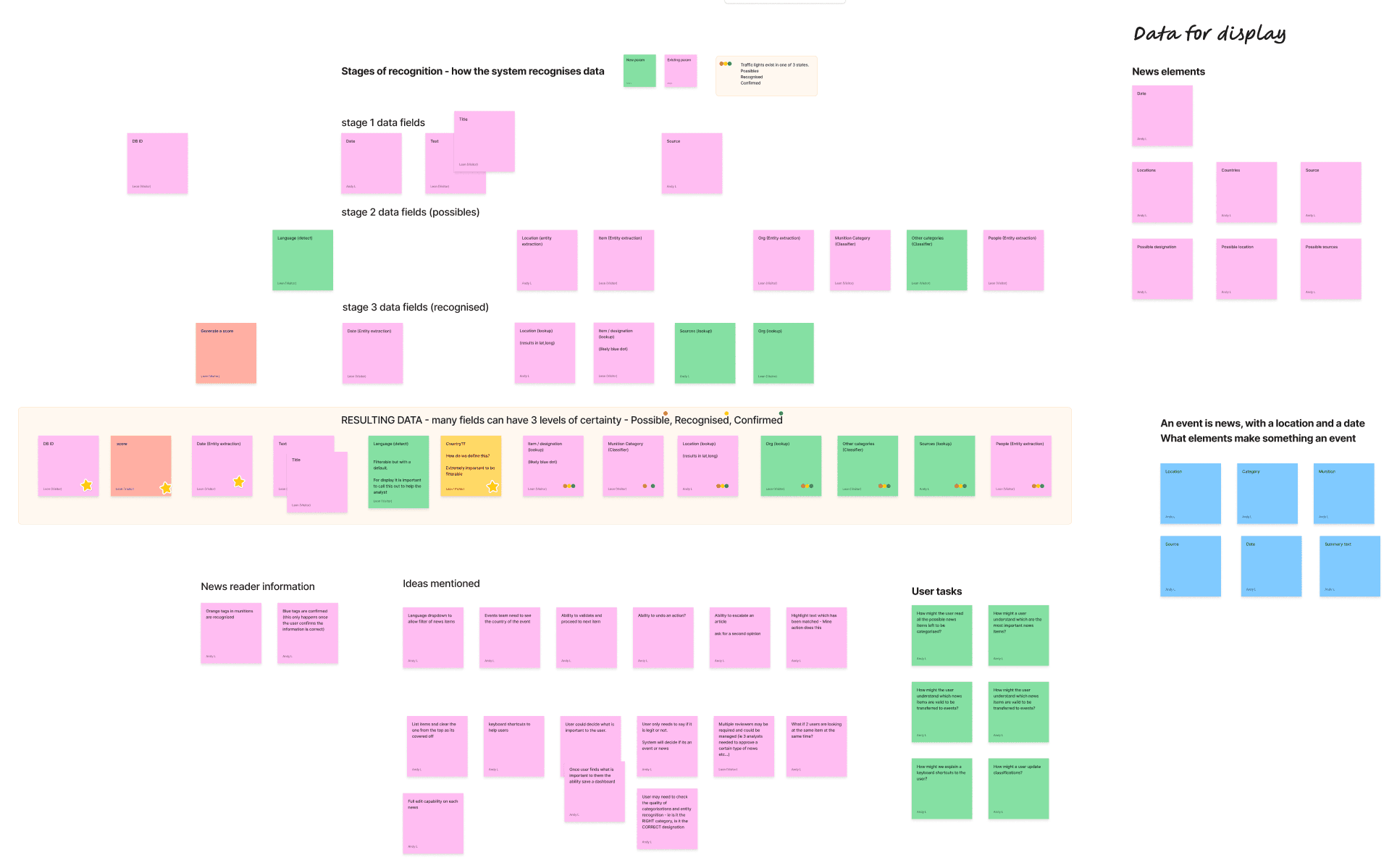
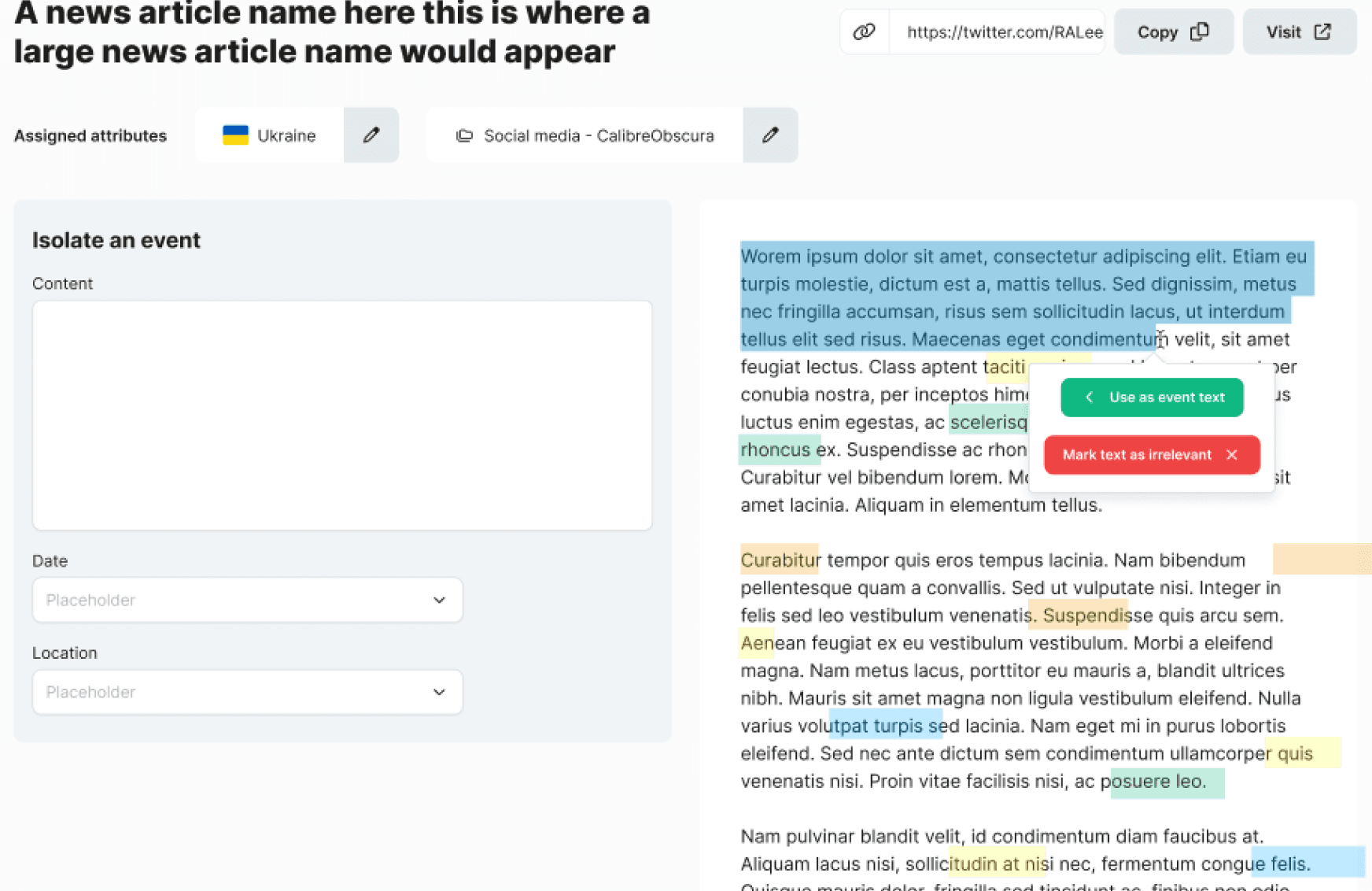
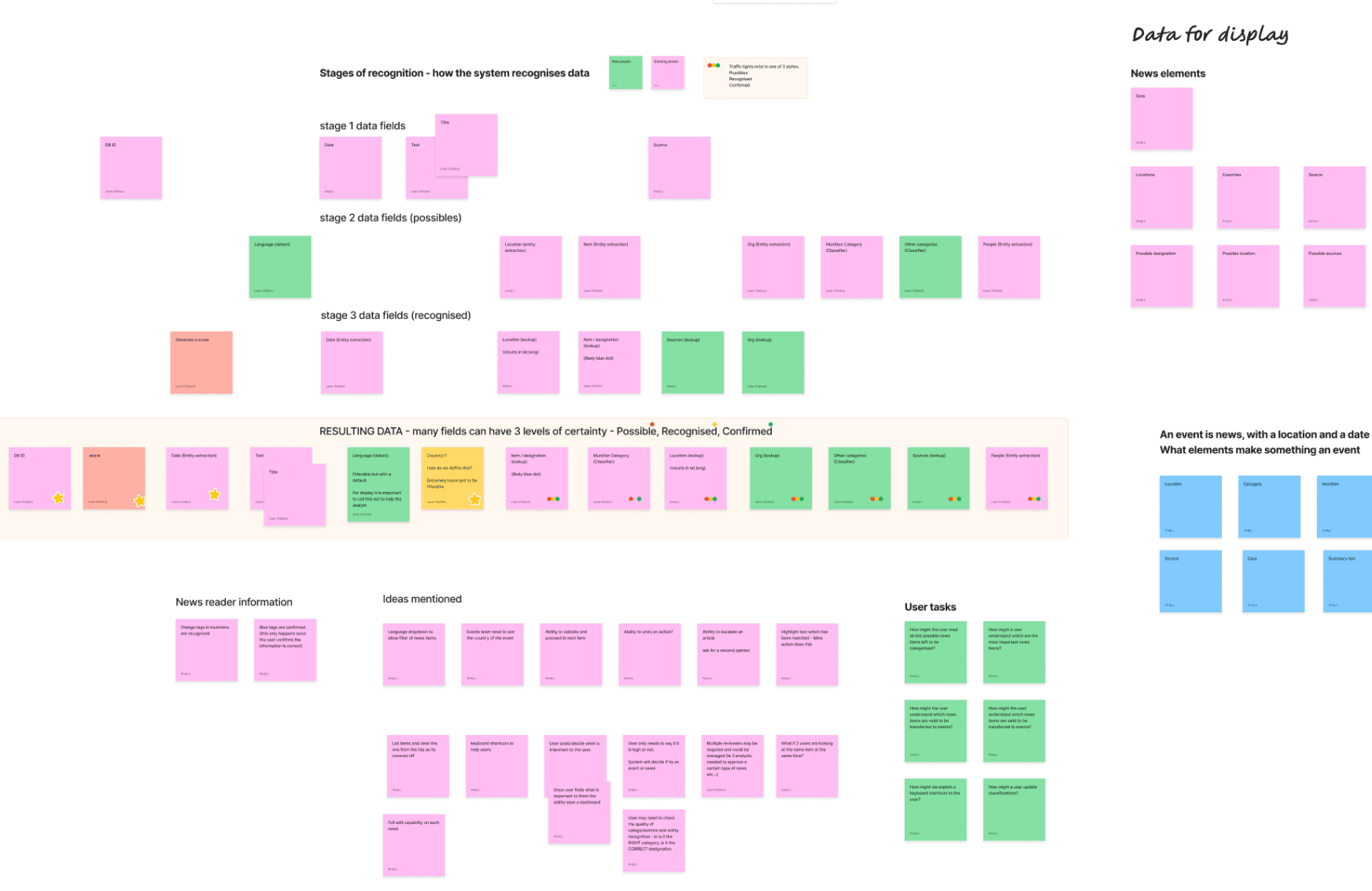
I also ran multiple workshops with the engineering team to understand what data was stored, then matched it to the site FE output to ensure we covered everything currently there. This reduced the risk of adding too much overhead to the data, while the goal for the business was to ensure greater throughput.
Design discovery
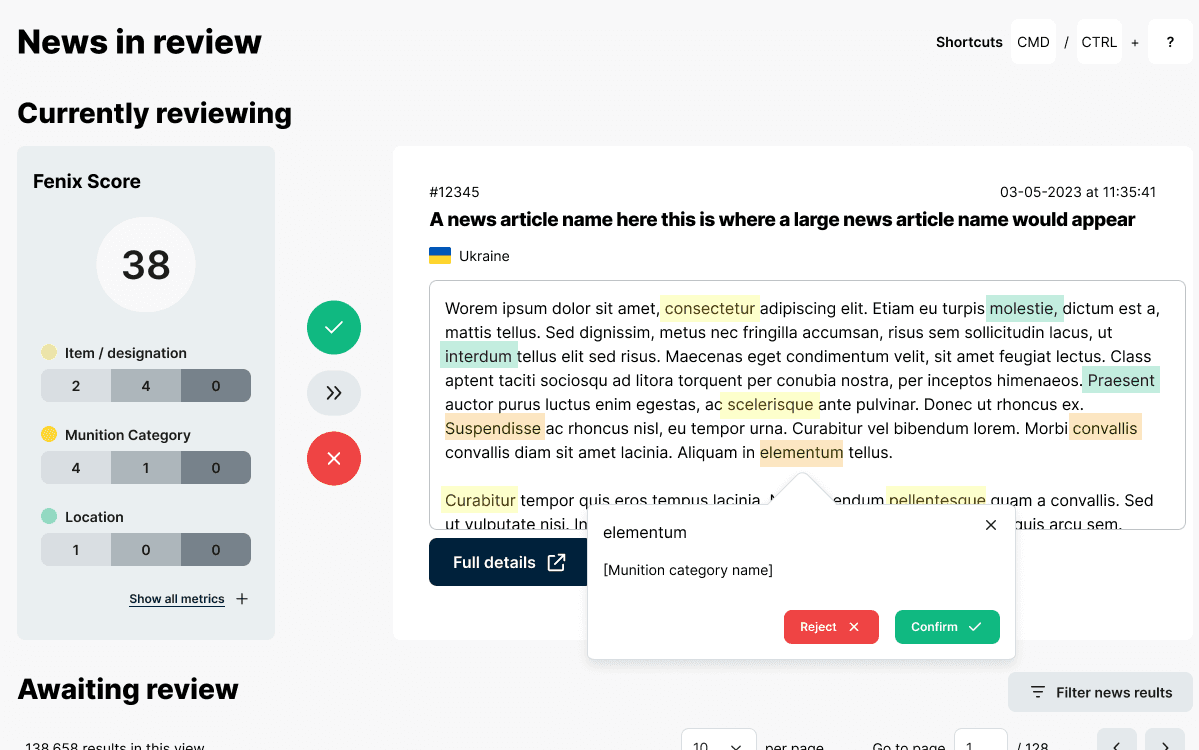
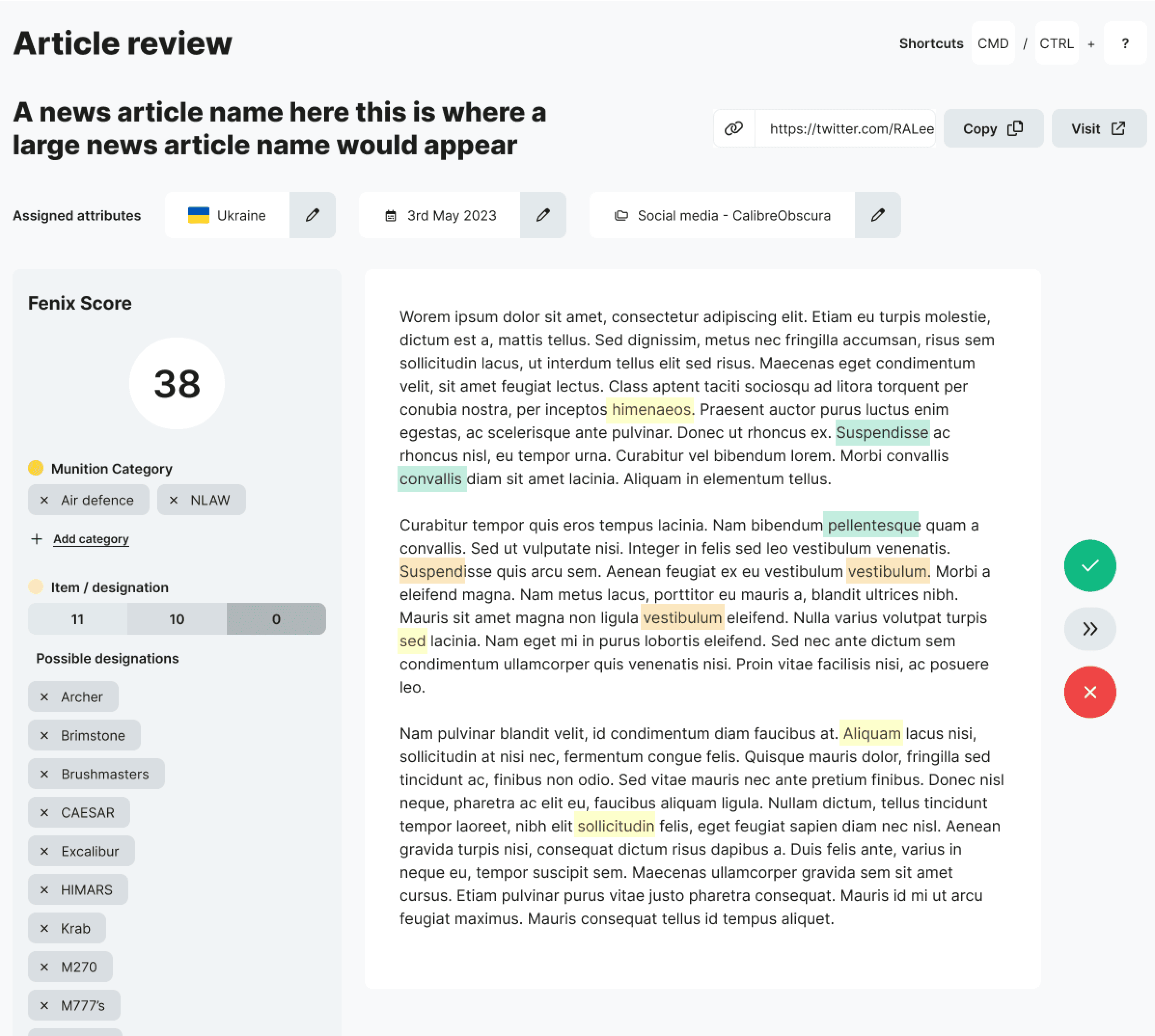
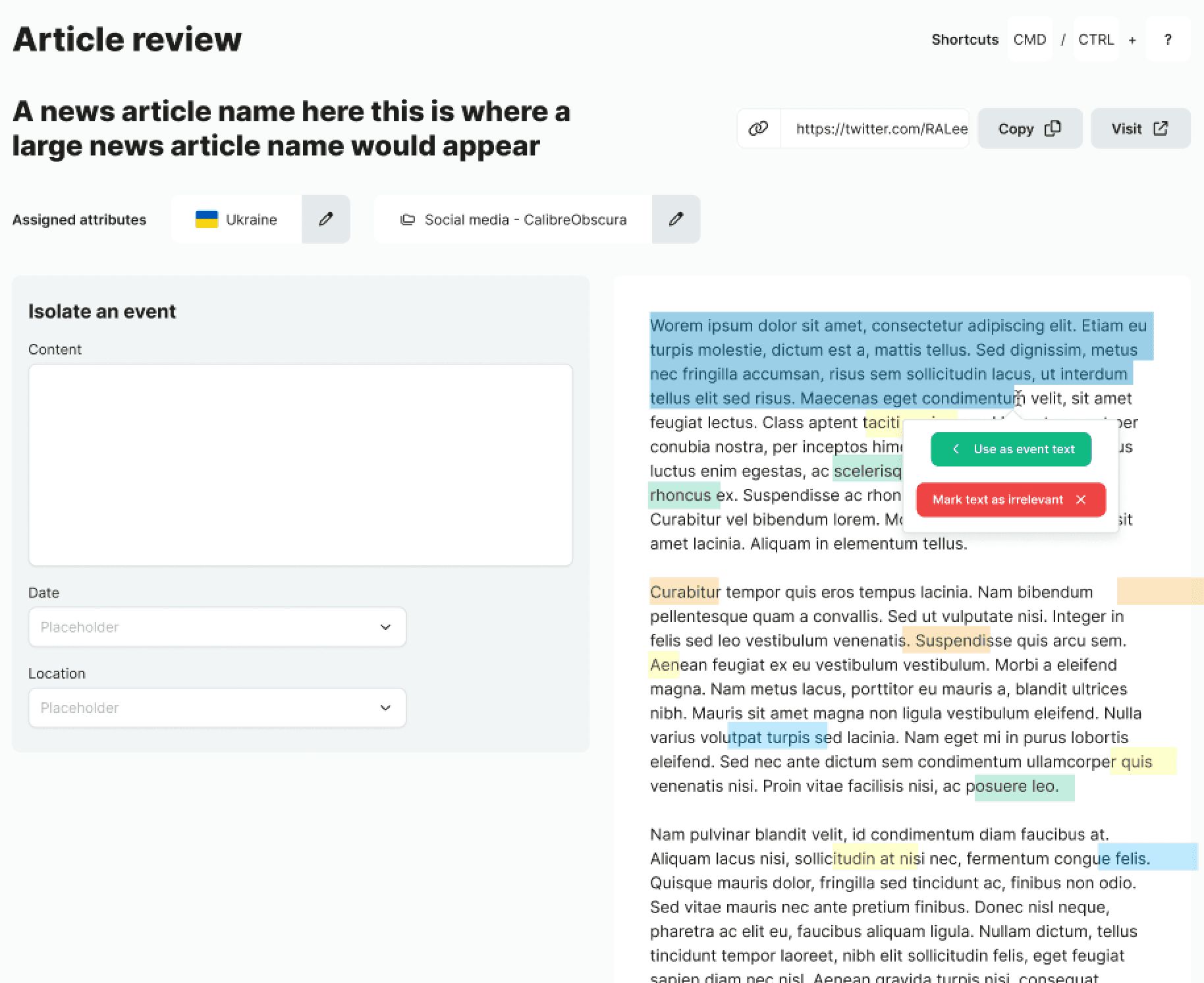
Mapping prototype testing feedback
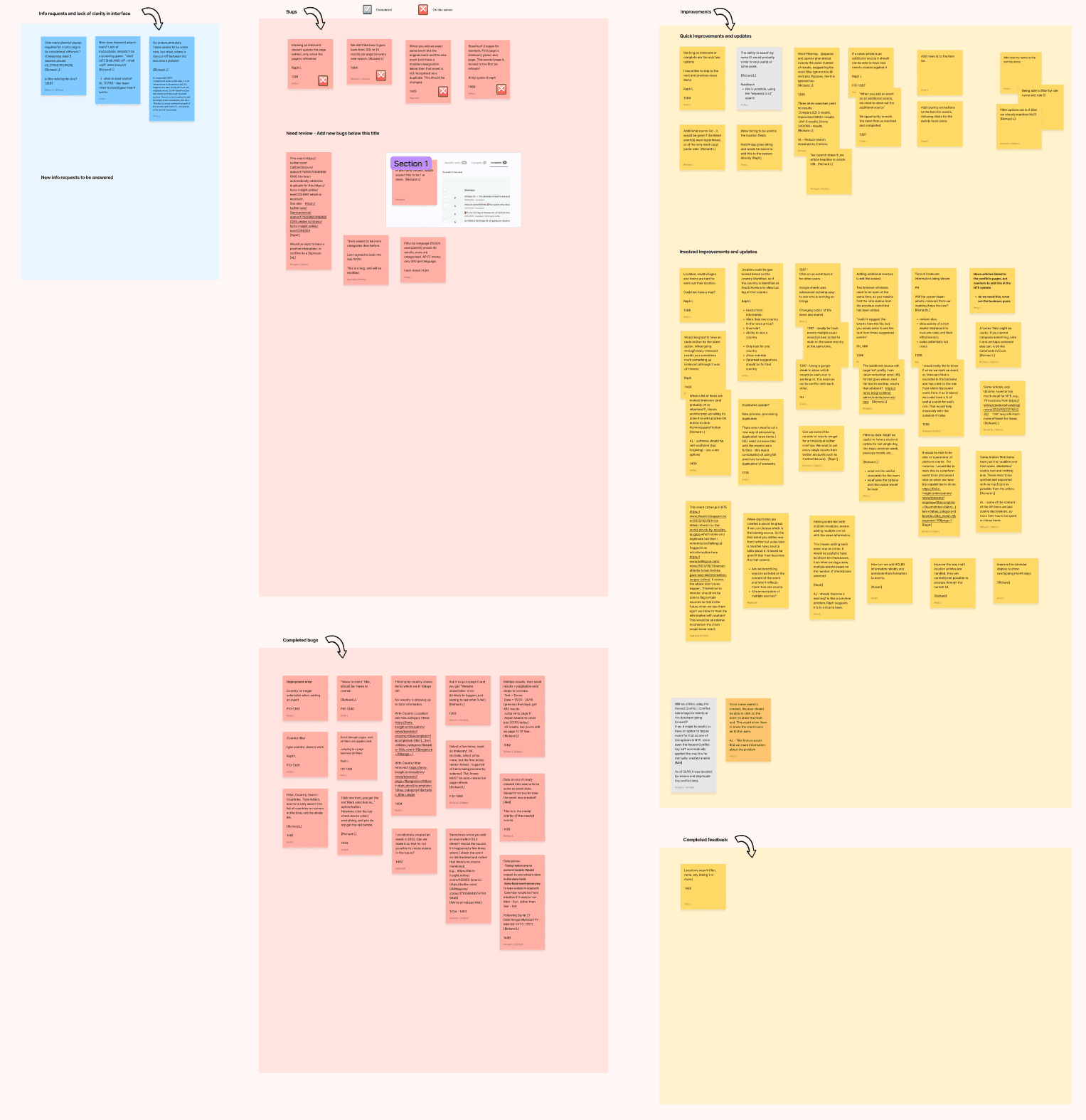
This project required a thorough solution, but one that could deliver quickly. This meant making the complicated task simple for the user and engineering. This doesn’t always mean a simple solution, but it does mean being mindful of added and unnecessary complexity.
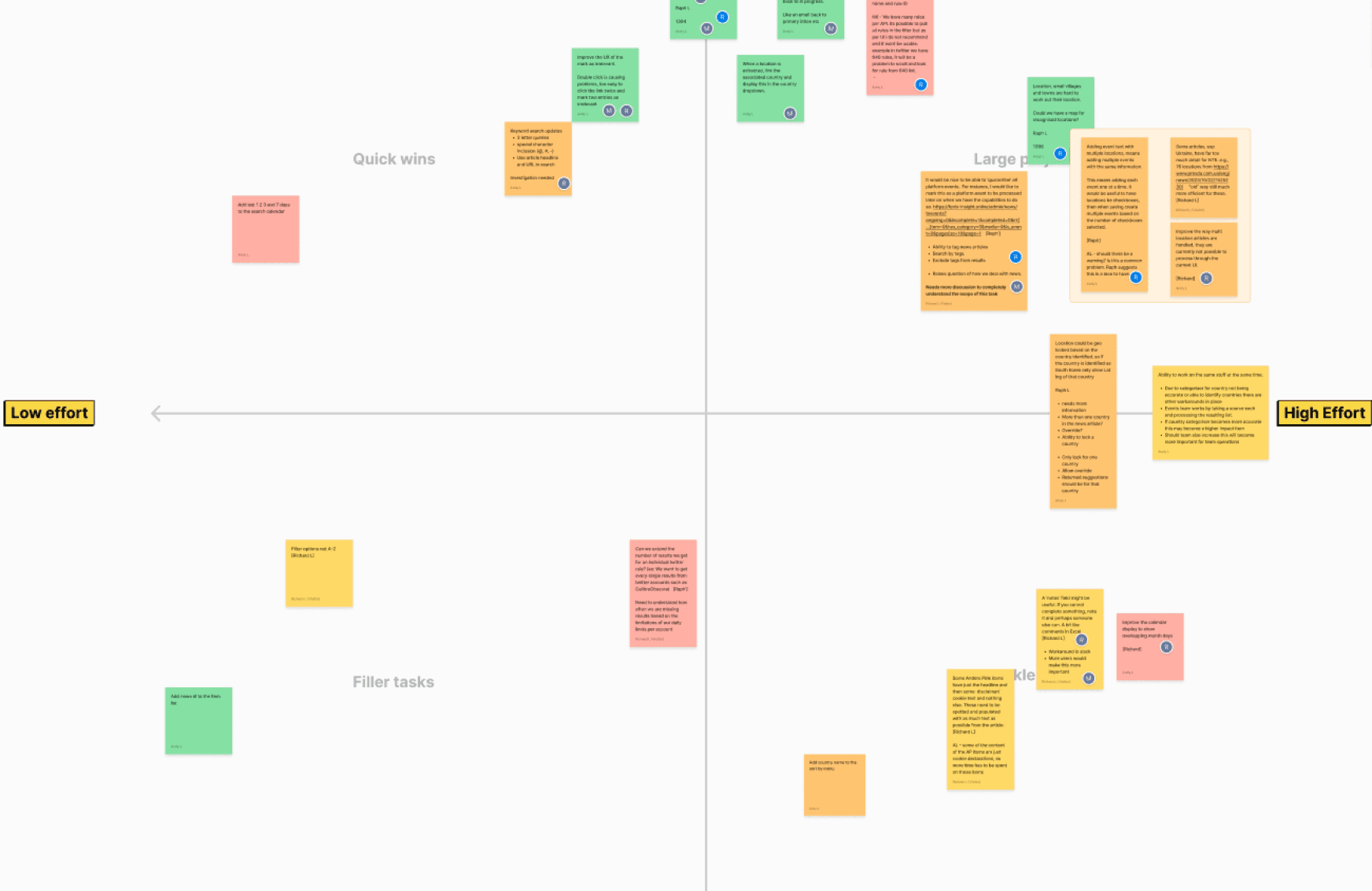
Prioritisation and dot voting workshop
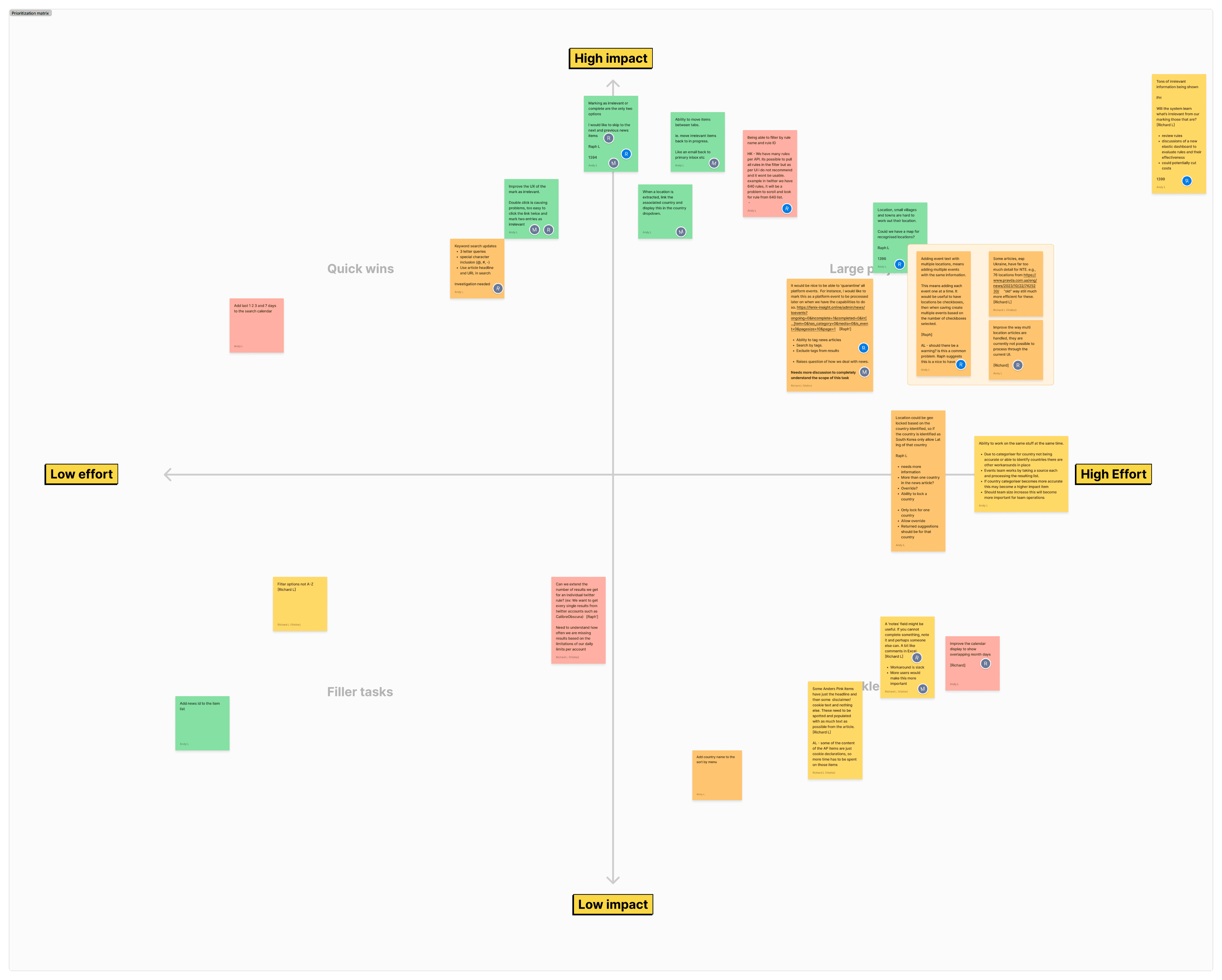
I am a big fan of running prioritisation workshops based on an impact-over-effort analysis. This really helps bring all departments to the same level of understanding. Unusually for this project, our internal users were able to join afterwards and vote on the features they most wanted. This helped with story mapping the initial releases.
Solution
An experience focussed on problems and reducing load for the user.
The outcome of this project was a complex interface, but it still reduced the load on the user compared with the previous multi-step, multi-user process.
Below are 3 key areas that saw great improvements for the user.
Visibility of all records
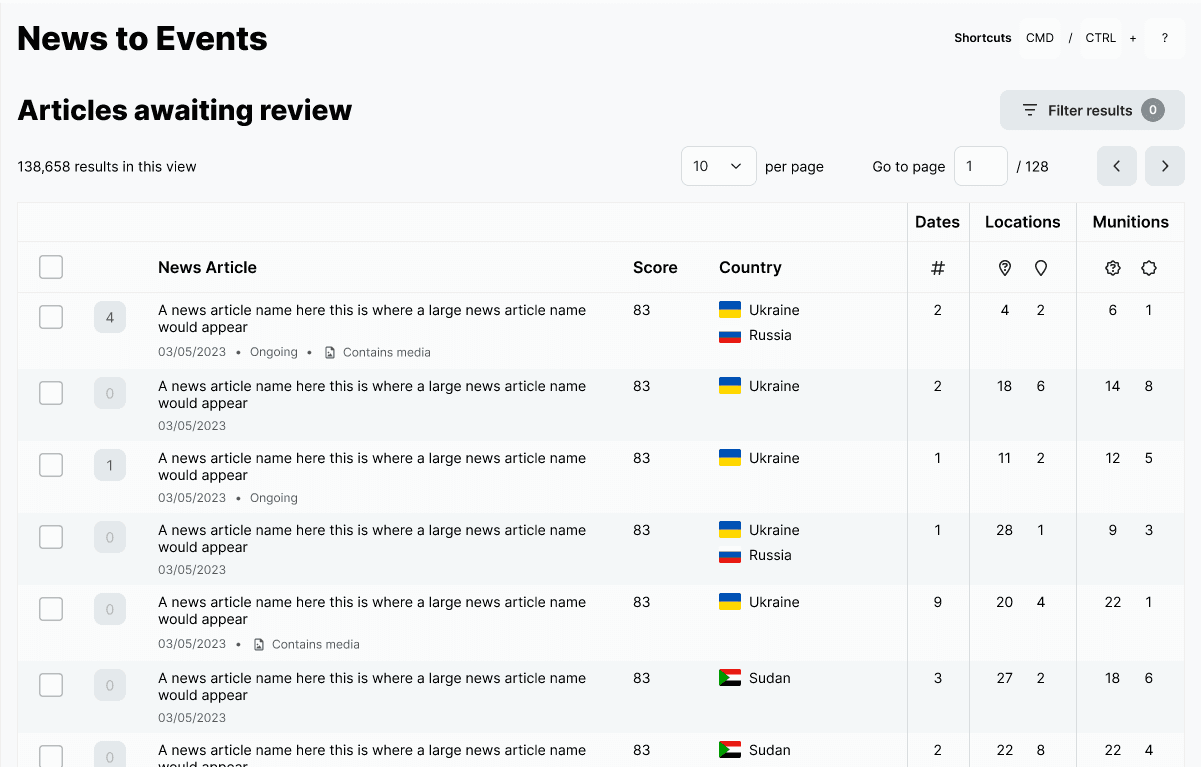
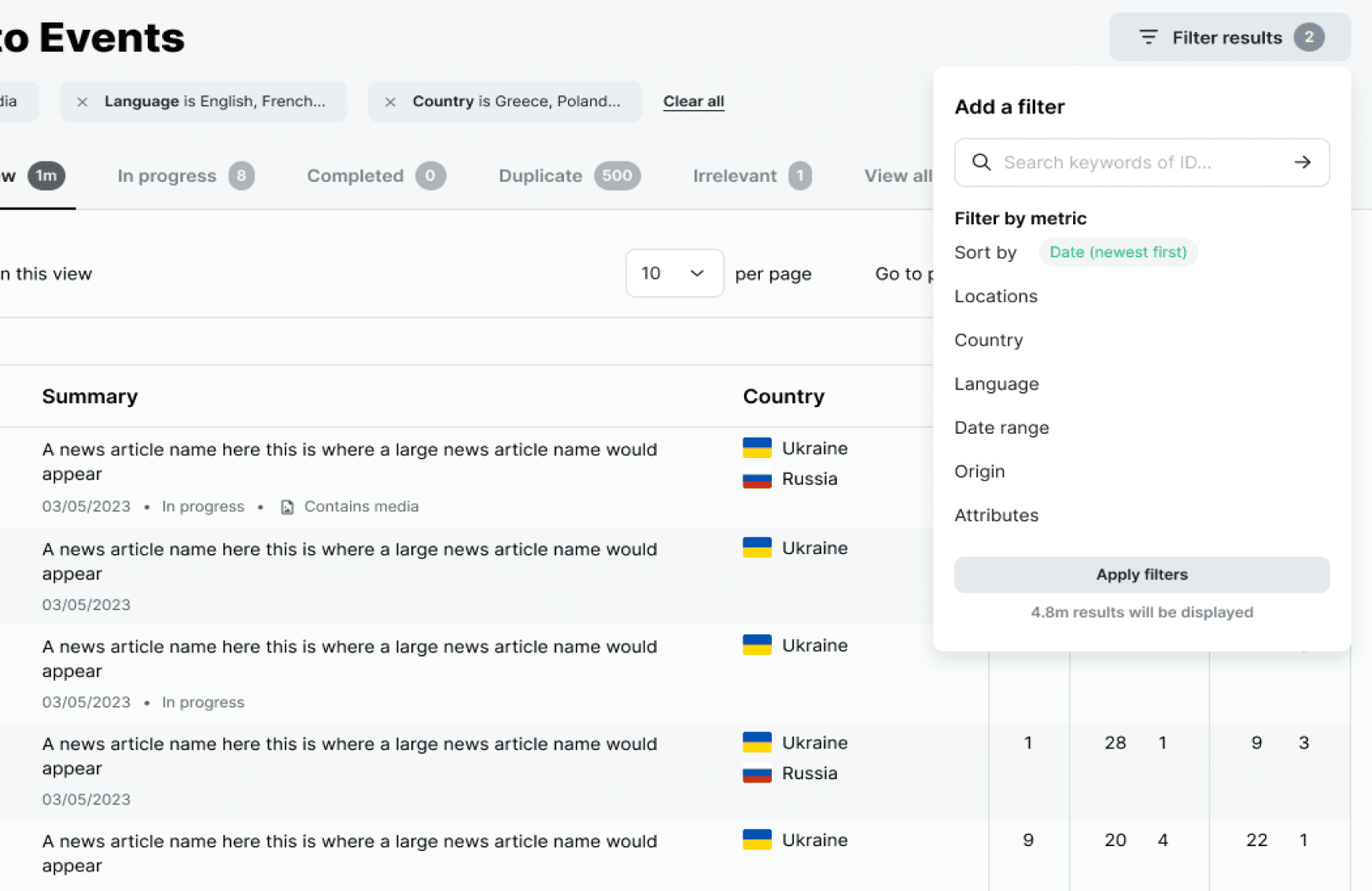
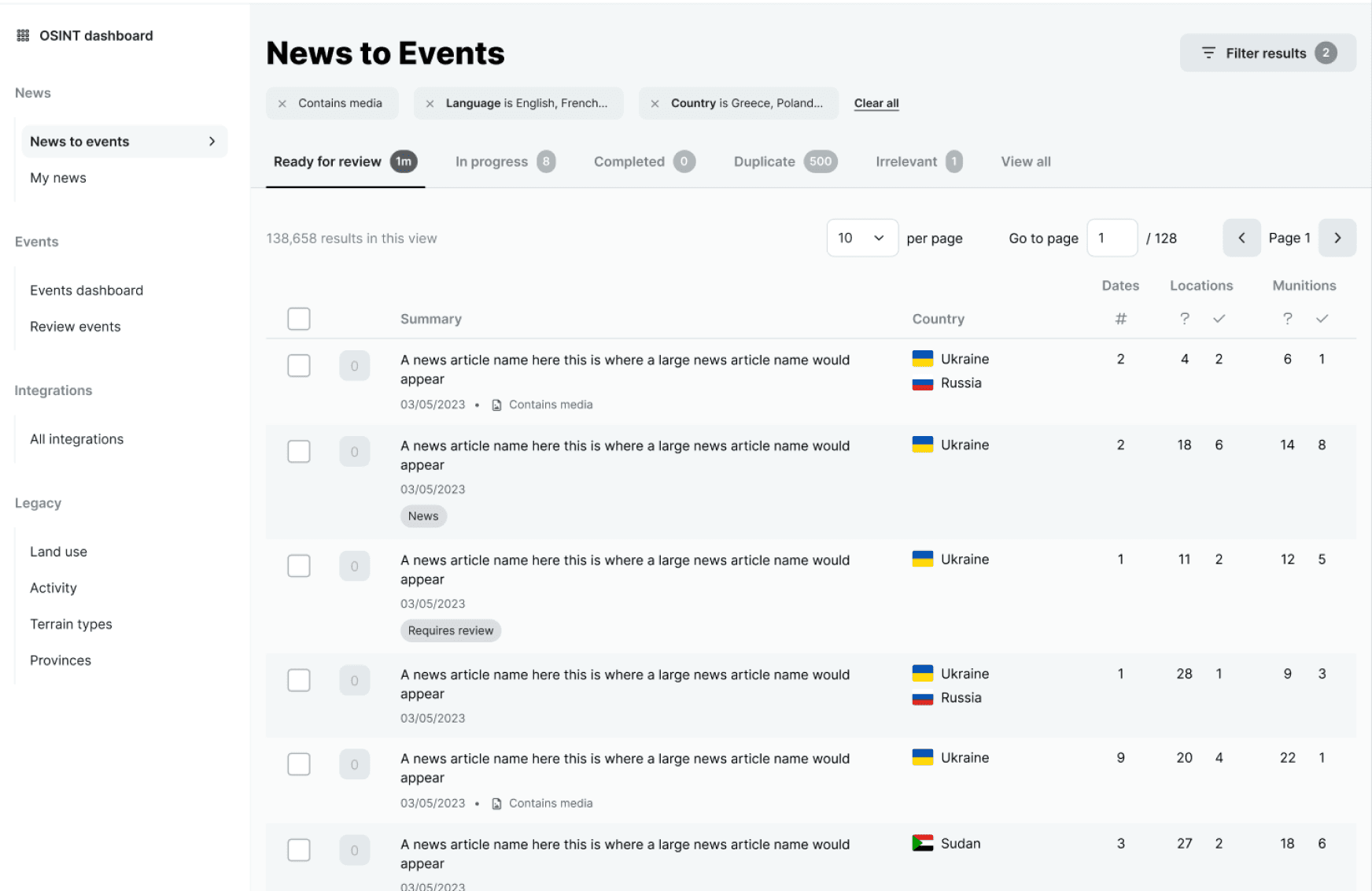
Up until this point, it was not possible to view all the articles together. Seeing which ones contained media (using tags) and also which ones had events created from them. Additionally, the list gives information on extracted locations, dates and munitions mentioned in the articles.
Ability to filter records
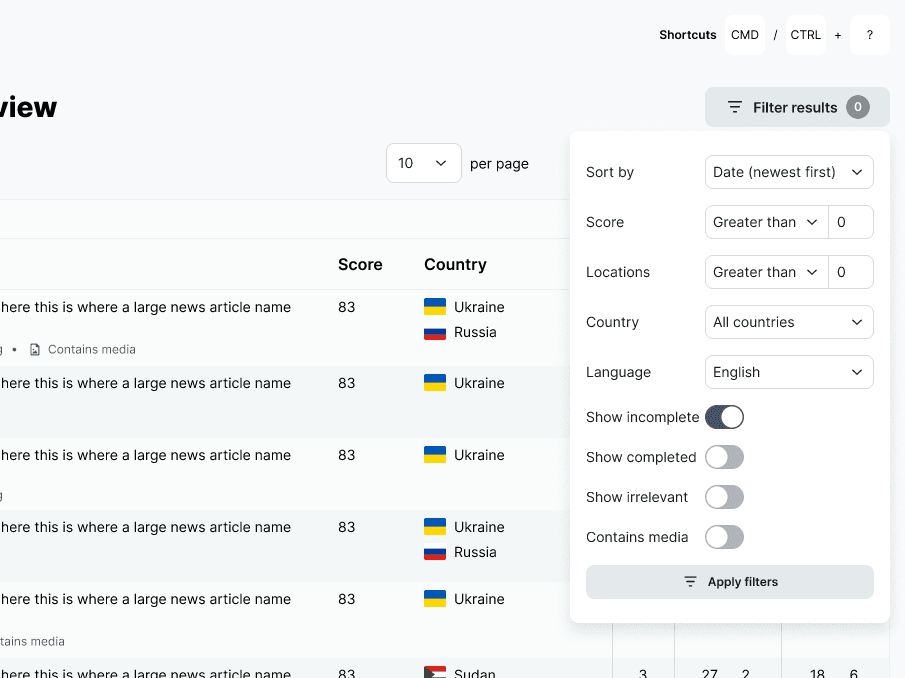
This seems like an obvious element to add, but its impact was incredible. Users can now filter the results they see by specialism. Review completed news items and even review other data in languages other than English.
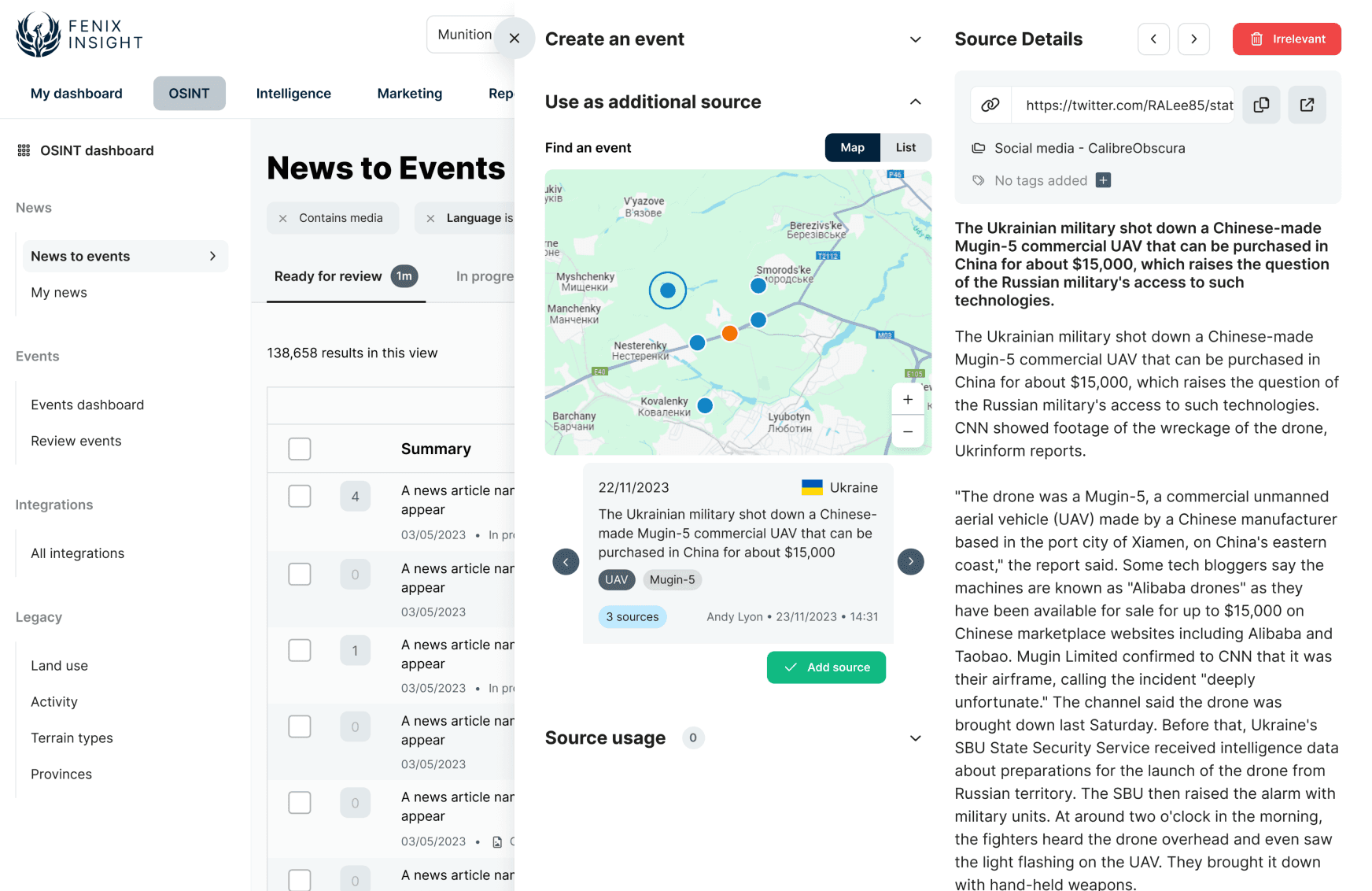
Popover event insertion
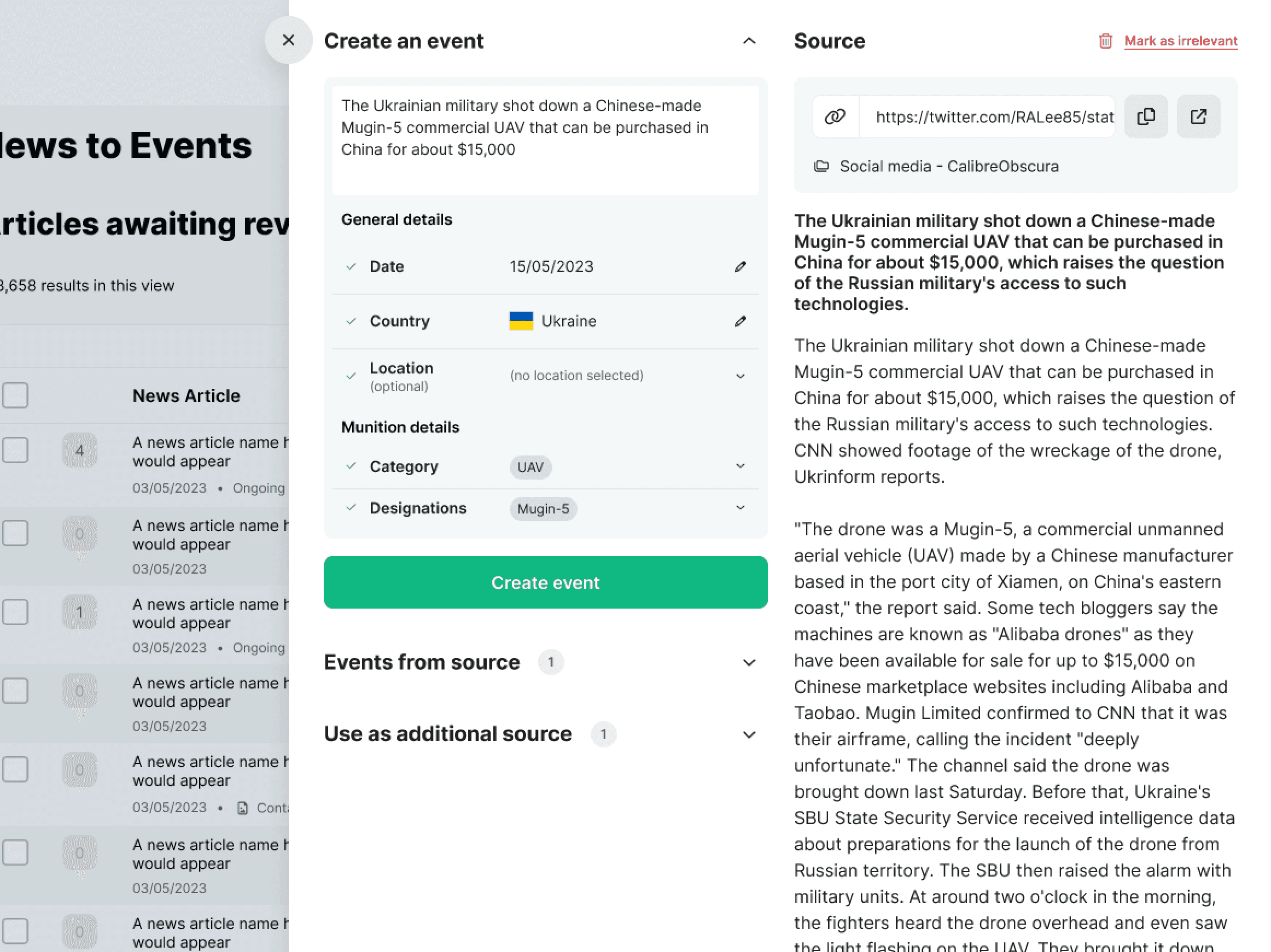
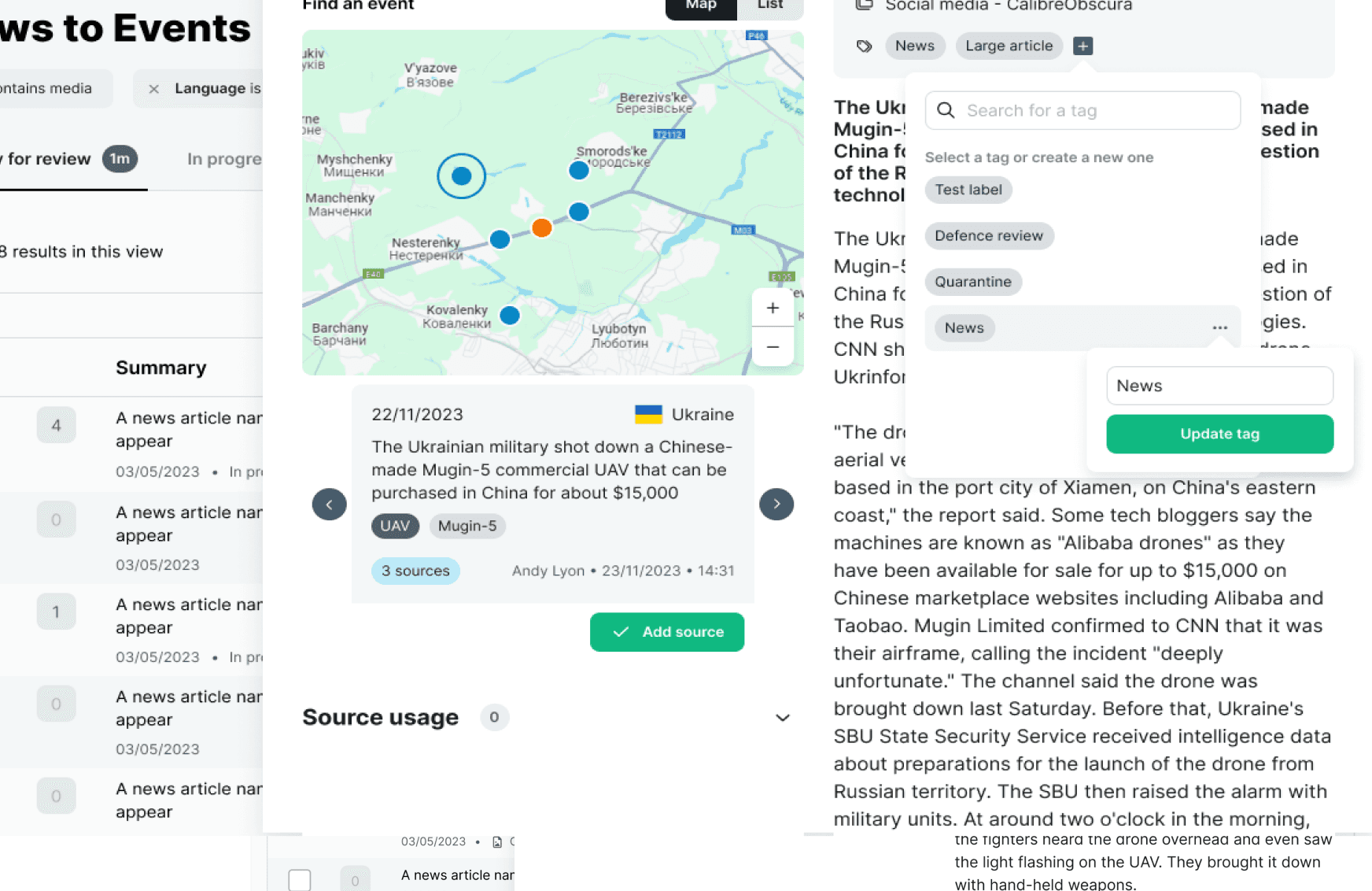
To keep your location context on a long list of items on the page, we implemented a popover that keeps the list visible behind the active input screen. Doing this allows us to keep many decisions in one place and reduces load time significantly, leading to faster event turnaround.
Impact
Did we achieve what we set out to do? Have we managed both the user and business needs?
In a word, yes, this project is by no means finished, but it has taken the team to a new level and enabled them to process information in ways not seen before.
15x
Increase in conflict data processed
Low value events increased by 15x and high value events by 14x.
3 hours
Faster upload for urgent events
Faster upload for emerging conflict zones. This became a USP.
2,300
Events processed in the first month
This was a new record for the events team.
The team have done a fantastic job, and I was very pleased with the outcome. The first 2 weeks after launch required further rounds of improvements, and since then, we have added features such as attributing multiple sources to an event (something not previously possible) and the ability to move an item into different states.
Reflection
What have I learned and what might I do differently?
This was many of the teams' first exposure to design thinking and a process like this. It is more front-loaded than a development-led project can be (at least in my experience). It can feel like research and ideation take up a lot of time. However, the feedback following the deployment has been overwhelmingly positive. Users feel more attached to the product (endowment effect). Engineers have had fewer updates because users are getting a product that solves their key problems, and key stakeholders in management and sales are seeing the benefits too.
Understanding the user was the key to success
During all the fact-finding and investigative work, I would hear "we've never been asked this before" or "I didn't know they did it like that". Removing the disconnect between departments was essential for this project to succeed. It was everyone's shared problem.
Ways I would like to improve…
The project
Implement real-time notification of users working on an event
Gamify the experience; the users currently work from a monotonous list of events with no end in sight.
Continue to check in with the internal team of users to understand further what they require.
The process
Implement a more formal process for how we carry out this work.
Continue to work with engineers to improve and develop the handoff that occurs.
Improve our style and component system to include commonly used elements.